Source
The quarry
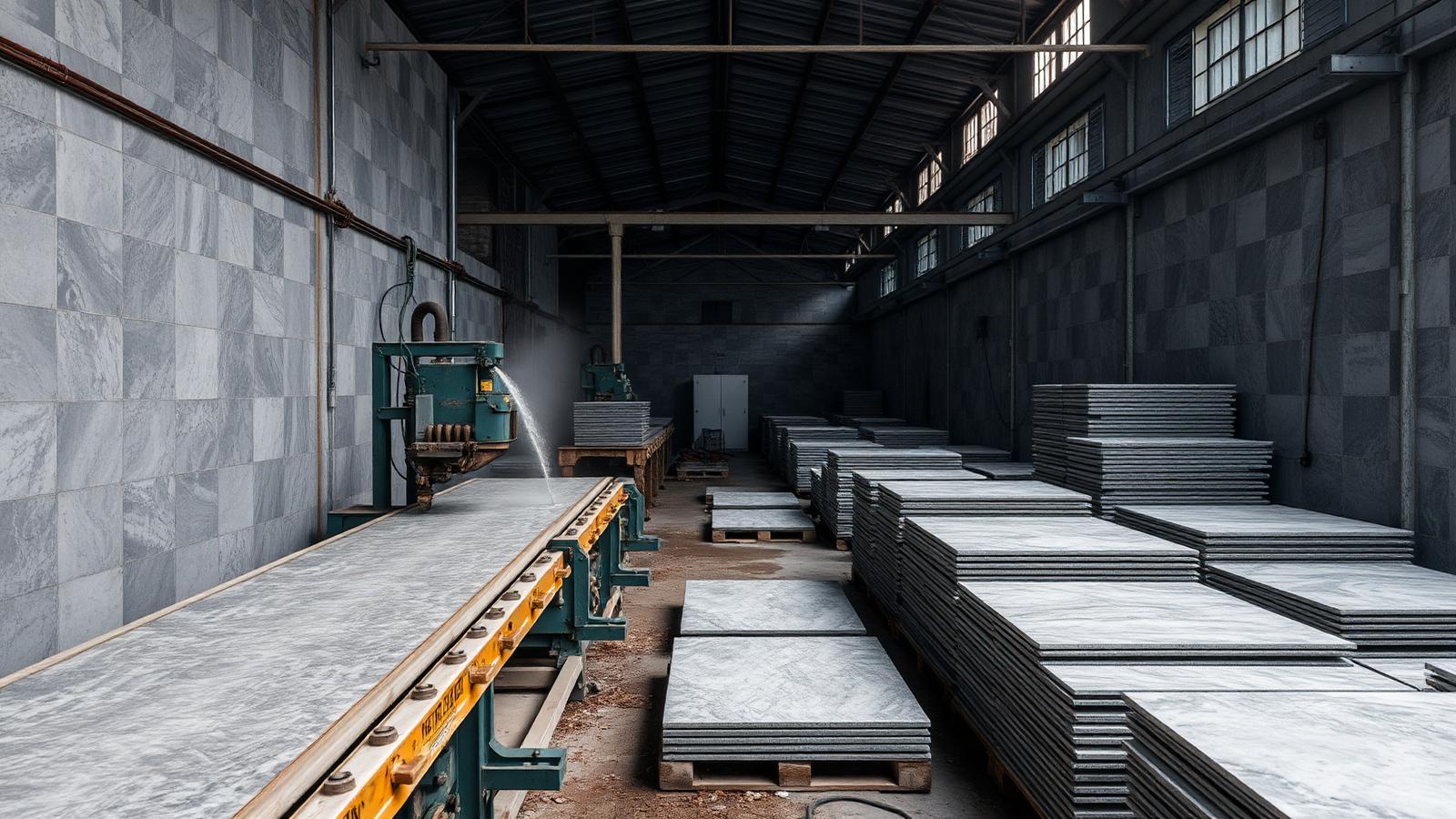
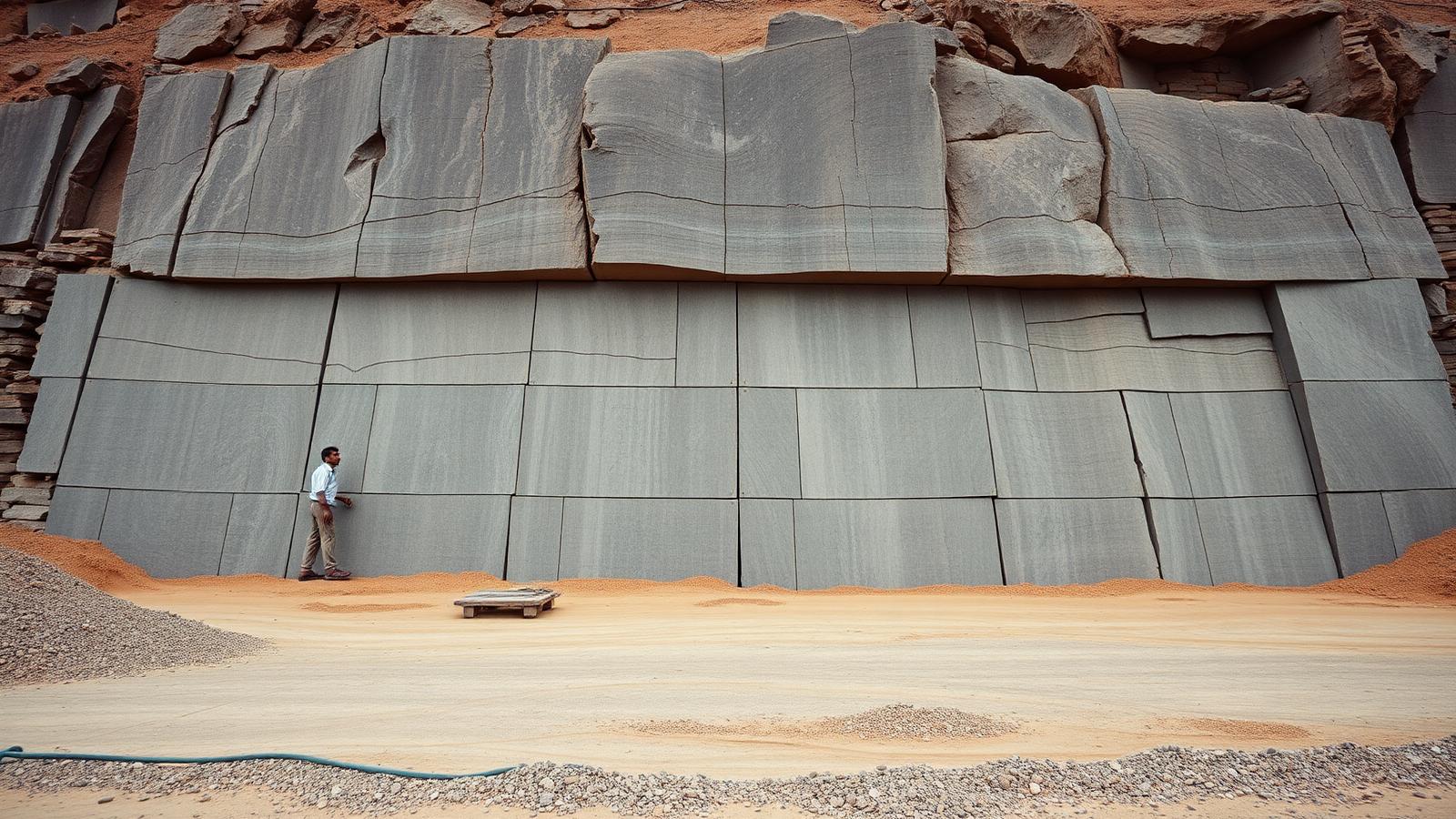
Mallikarjun Stone Polishing Industries holds the lease at Miriyan village, Chincholi taluk, Kalaburagi district. The family has worked this face for over thirty years. Extraction, cutting and finishing all happen within the same site boundary.
01 / Site
Site data
- Owned quarry lease area
- 18.6 ha
- Proven workable reserve
- > 30 yrs
- Monthly processing output
- 42,000 m²
- Polishing lines
- 4
- Export containers / month
- 26
- Direct employees
- 168
Miriyan village, Chincholi taluk
At current extraction rate
Calibrated and finished
2 calibrating, 1 honing, 1 polishing
Current committed capacity
Quarry and yard combined
02 / Beds
Bed sequence
Five benches within a vertical range of a little over six metres. The narrow spread is why the four stones share a technical position.
| Bench | Stone | Worked thickness | Saleable yield | Note |
|---|---|---|---|---|
| Bench 1 — upper | Shahabad Yellow | 0.9 m | 62 % | Warm buff, strongest wet-dry shift |
| Bench 2 — transition | Shahabad Cream | 0.6 m | 48 % | Palest material, interior grade |
| Bench 3 — main | Shahabad Grey | 2.4 m | 71 % | Volume bed, most consistent colour |
| Bench 4 — main lower | Shahabad Grey | 1.8 m | 68 % | Currently working face |
| Bench 5 — mineralised | Shahabad Maroon | 0.5 m | 39 % | Intermittent, output capped by the bed |
03 / Method
Working method
One bench is worked at a time. That is the single most important control on colour consistency between containers.
Overburden is stripped mechanically and the bed is opened along its natural parting. Slabs are lifted with wire and wedge rather than blasted, which keeps the bed face intact and the yield high. Lifted material is moved directly to the calibrating lines on the same site, so raw slabs are not stockpiled outdoors through a monsoon before finishing.
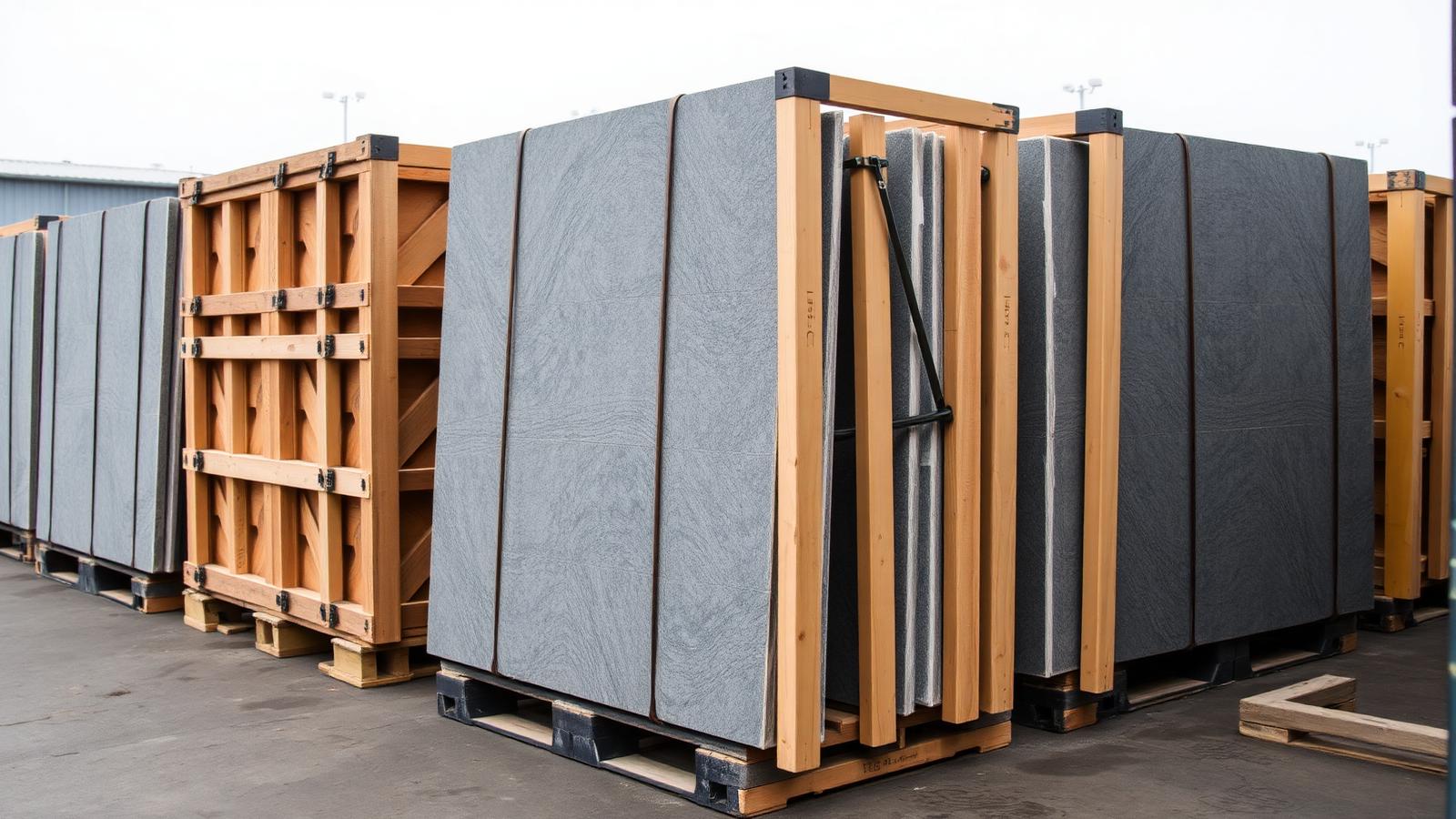
A colour reference plate is retained from every bench. Production is checked against that plate at release, and the bench identifier travels with the batch through the calibrating, finishing and crating stages onto the crate stencil.
Where a reorder cannot be cut from the same or an adjacent bench, that is stated before the order is confirmed rather than discovered when the pallets are opened.